

Resources for ALS Patients and Caregivers
The more you learn about amyotrophic lateral sclerosis (ALS), the more prepared you may feel moving forward.

What are some helpful ALS resources?
There are many resources available to help but it can feel overwhelming to decide where to turn next. It’s helpful to be aware of what resources exist and go back to what’s most helpful for you when you are ready.





This is not an exhaustive list of resources. Other than ALS Pathways, Shionogi Inc. does not endorse any particular service or group and is not responsible for the content of these sites. These resource organizations are provided for informational purposes and are not meant to replace a doctor's medical advice.
How can you get an expert’s point of view on ALS?
A healthcare provider with years of experience treating ALS helps educate patients by offering insights on the loss of physical function associated with ALS.
Use the ALSFRS-R Input Tool
The ALS Functional Rating Scale-Revised (ALSFRS-R) is a questionnaire used in clinical trials to measure the impact of ALS on an individual.
What ALS podcasts are available?
The ALS Pathways Podcasts are free audio files that you can stream or download using your smartphone, tablet device, or desktop computer. Each episode in this series is about 10 minutes. Podcasts are a great way to get practical information wherever you are.
The convenient, multipart ALS Pathways Podcast Series covers a range of ALS-related topics. Each episode explores a new and interesting subject. Learn more about the science of ALS, how to prepare for and manage symptoms, and tips for both patients and caregivers.
Even though these podcasts were created in 2018, they offer helpful information that’s still relevant today.
In ALS: The Basics, Dr. Selkirk gives an overview of ALS, including the effect the neurodegenerative condition has on the nerve cells of the brain and spinal cord of ALS patients. Using the ALS: Your Pathways resource as a guide, Dr. Selkirk provides details about what ALS is and how the disease affects muscles, resulting in symptoms such as muscle weakness, twitching, and cramps.
00:0021:00
Review the Getting Started Brochure
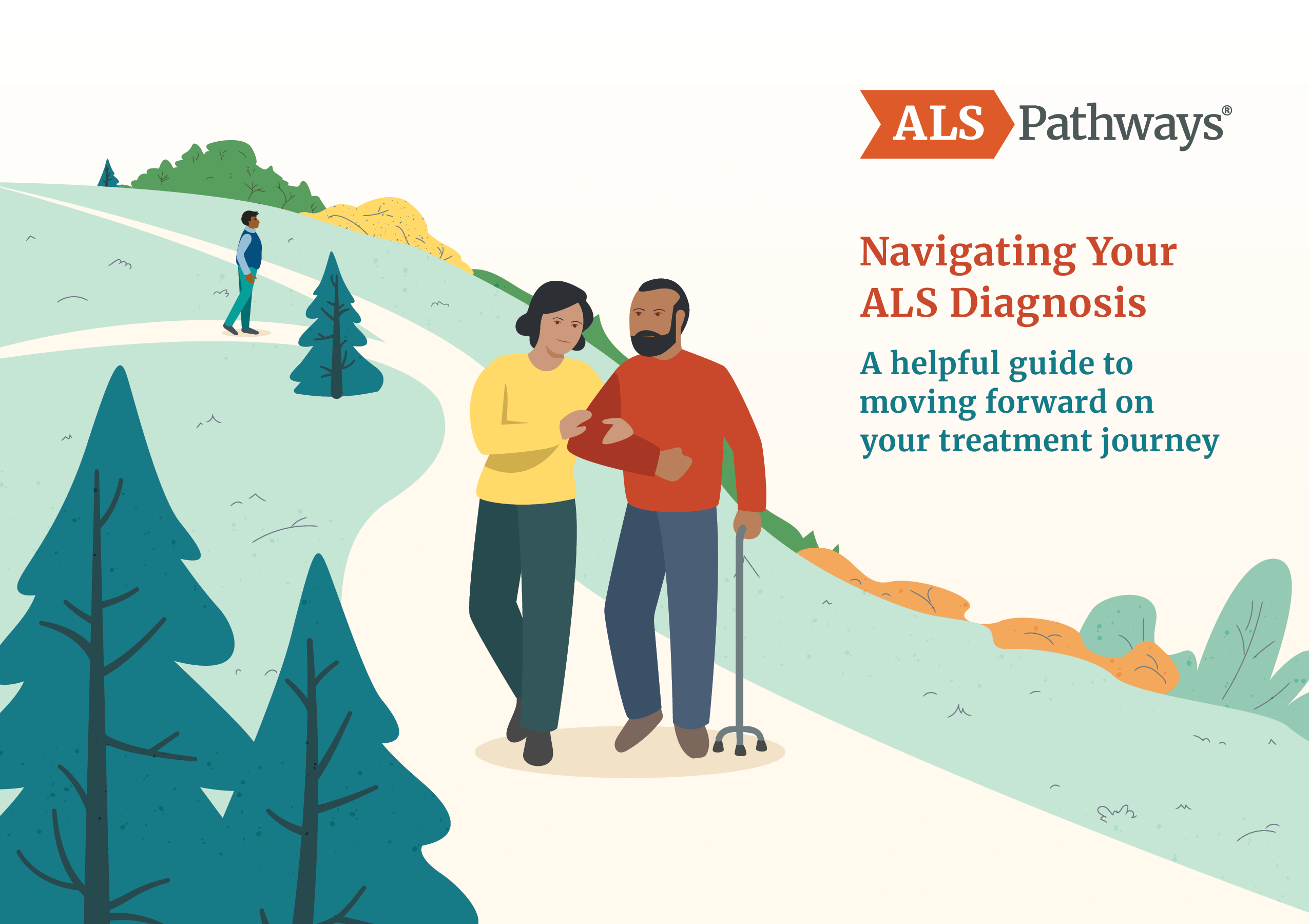
Get helpful information for people recently diagnosed with ALS, including disease basics, tools that may help monitor progression, and strategies for daily living.
How can you find an EMG provider?
An electromyography (EMG) is an important series of tests that, along with other clinical evidence, can be used to help diagnose ALS.1
An EMG measures your nerve signaling and muscle response and can provide valuable insight when evaluating muscle weakness.1
When receiving an EMG, it’s important to choose a physician who has completed training in electrodiagnostic (EDX) medicine. To help you find one, the American Association of Neuromuscular & Electrodiagnostic Medicine (AANEM) maintains a list of physicians who are certified in EDX by an independent board.